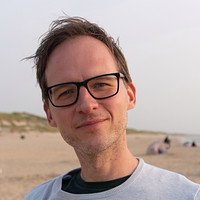
Professor Judy Honig is a true pioneer. In the United States she campaigned for the introduction of the Professional Doctorate, the applied doctoral programme that Saxion and other Dutch universities of applied sciences have also been working on recent years. Now Judy is touring the Netherlands for two weeks sharing her knowledge and experience, specifically in the domain of Health and Wellbeing. A domain where the call for a new kind of knowledge and innovative professional is loud and clear: “Not only a researcher, but also an innovator and agent of change: a different kind of scientist.”
When we meet Dr. Judy Honig in her workspace at Saxion Enschede, she has already completed a busy schedule. She has spoken to people from the Saxion Research and Graduate School, and visited the chairperson of the National Professional Association of Nurses and Caregivers (V&VN) in Utrecht. Despite this, she is still full of energy. She is after all on an important mission. “I’m here in the context of a Fulbright Specialist Program,” says Judy. “Fulbright provides opportunities for people to share their expertise with other institutions, agencies, and bodies.”
As far as expertise is concerned it’s a good fit. As a professor and Vice Dean at the Columbia School of Nursing, Judy Honig has a long track record. Her visit to the Netherlands is all about her pioneering work in the United States in the field of the Professional Doctorate (PD). In the Netherlands, the PD is inextricably linked to universities of applied sciences. In short, a PD provides the opportunity to complete a doctoral study within higher professional education. Professor Jan Jukema, who will be joining us later, is one of the leaders in this field within the domain of Health and Wellbeing. Judy and Jan came into contact and the rest is history. Or rather, this is certainly the case for the strengthened ties between Saxion and the Columbia School of Nursing, as there is still plenty of work to be done in other areas.
History repeating itself
Although major steps have been taken in the Netherlands to integrate the PD into higher education, there are still plenty challenges to overcome. Such as anchoring the PD title in our legislation. This being the case, who better to learn from than someone who has already faced many of these challenges? Dr Judy Honig says: “I went to the School of Nursing in the '80s because of its very creative and innovative structure, which allowed me to practice and teach. That was not common in nursing at the time: most people either only taught nursing or worked as a nurse. However, I was able to do both back then, and I wasn’t the only one. From 1986 onwards, we had a strong faculty, consisting of highly qualified lecturers who combined teaching with clinical practice in order to supervise students towards higher clinical education. Later, around 2000, everything started moving more earnestly in terms of presentations and publications coming out of Columbia University.”
At the time, we strongly recommended the setting up of a Doctor of Nursing Practice (DNP), an alternative to the PhD, which was a very bold statement at the time.

Judy briefly runs through the history of the Practice Doctorate, as the PD is known as in the United States. To be clear, the PD and the Practice Doctorate are similar, but not identical. “The Practice Doctorate is discipline-specific,” Judy explains. “Some examples are disciplines such as physiotherapy, nursing or occupational therapy. The Professional Doctorate has a broader scope within a domain. It's more like a kind of professional umbrella.” Before we digress, Judy returns our focus to her history lesson, which is strongly linked to urgent societal issues. After the pioneering work at Columbia University, the challenge at the beginning of this century was to gain a national foothold. With that in mind, Judy welcomed the invitation to join a national task force. The American healthcare system of the time was mapped out, and knowledge gaps were identified among some types of healthcare professionals. In other words: a lack of knowledge, in this case in view of urgent needs in society. Judy illustrates: “The aging population, many people living with chronic conditions. People who want quality of life, right to the very end.”
The task force came to the conclusion that nurse specialists needed to be better educated in order to continue to meet the increasing demands of society. “At the time, we strongly recommended the setting up of a Doctor of Nursing Practice (DNP),” says Judy, “an alternative to the PhD, which was a very bold statement at the time." After that advice, there were still plenty of steps and barriers left, and finally, in 2006, the pioneering work of another task force – once again involving Judy – led to set standards for the so-called DNP degree and required competences for graduates.
Everyone is talking about how a bachelor’s candidate can go straight on to the Professional Doctorate. It's the talk of the town.

Talk of the town
Back to the here and now. We are still discussing the differences between Practice Doctorates and the PD when a good humoured Professor Jan Jukema enters the room and joins us at the table. “I knew you’d come and help me,” Judy jokes. Jan immediately grasps what we are talking about. He joins in: “Everyone is talking about how a bachelor’s candidate can go straight on to the Professional Doctorate. It's the talk of the town.” By which Jan is referring to the accessibility of a DNP track; in the case of a PD, the candidate must first hold a master’s degree. “These are real barriers,” says Jan, “which are not relevant for some candidates. For example, when it comes to professionals who have a lot of work and life experience, which means that they are already able to recognise complex issues in practice and put changes in place to deal with them. I believe that we can learn from that. There are a few exceptions where you can do a PhD without a master’s, but these are extremely rare. In higher professional education, we can draw up our own rules for the introduction of a PD programme. After all, what are the arguments for us to stick to the order of bachelor’s, master’s and only then have access to the professional doctorate?”
There is a hint of urgency in Jan’s words. Something that may have to do with the same challenges that Judy faced in the United States. Think of the ageing population and diseases of affluence. “We have to meet our societal requirements,” Jan continues, “and especially the requirements in the Health and Wellbeing domain, where a continually decreasing number of professionals are at work. That's why we need proportionally more highly educated people: professionals who can handle these major challenges.”
They have a lot more freedom in what they can do. A lot more career options.
Major advantages
We can't stop talking about the benefits that PDs bring to Health and Wellbeing; not only for society as a whole or for individuals, but also for the healthcare and welfare professionals involved. “They have a lot more freedom in what they can do,” Judy says of the Practice Doctorate in the United States. “A lot more career options. Even as a practitioner, they are asked to evaluate, for example, the treatment of diabetes patients, in order to find out how well something works in practice. Thanks to their skills, they are able to do that.”
It all sounds very promising. And what does Judy hope to achieve by visiting the Netherlands? Judy: “One of the things I want to do is help Jan and his colleagues come up with relevant products that are derived from practice. Products that match the doctoral level of the PD. In the case of the Professional Doctorate, we don't have peers yet, which makes it difficult to be evaluated by colleagues. When it comes to further acceptance, I think thorough case studies will help, for example. A case study is acceptable to academia. And yes, you have to make sure that it is accepted.”
What may also help with further acceptance of the Professional Doctorate in Health and Wellbeing is the demonstrable correlation between higher educated nurses and better patient outcomes. Judy encourages us: “I think the Netherlands is definitely on the right track, and I'm very impressed by the efforts that have been made here.” And when will Jan be satisfied? “That makes me think of several answers,” he says. “But I'll be very happy when the Professional Doctorate becomes a standard part of higher professional education. When it is a recognised degree included in our Higher Education and Research Act.”
Photography: Thomas Busschers