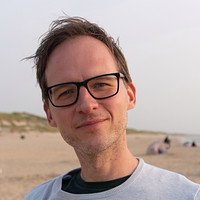
Lecturer- researcher Almudena Gonzalez has been appointed as member of the UN World Committee on Tourism Ethics (WCTE). Over the next four years, she will be dedicating herself to the implementation of the Global Code of Ethics for Tourism on an even larger scale. An opportunity she was able to take partly due to her work at the Saxion Hospitality Business School. “The role of Saxion Tourism Management is now really paying off. It is time to continue this dialogue in an international setting.”
Almudena Gonzalez has described her mission for the coming years on LinkedIn as guiding the global tourism sector towards a situation where integrity, responsibility and respect for human rights are put first. She sees her appointment by UN Tourism not only as a huge honour, but perhaps even more as an ideal match.
“It all fits perfectly with the vision of our school at Saxion. We specifically focus on an ethical approach to tourism in the curriculum. The idea of actively contributing to the recovery of tourist destinations plays a key role in this. It is our task as an educational institution to train professionals who are able to make the right ethical decisions, and in doing so making a positive contribution to society and what is best for local communities.”
If we stick to the idea that tourism is not a goal in itself, but rather a means to regenerative development, then we are on the right track.
Sustainable 'sweets'
Almudena explains that creating a tourist destination can sometimes create a situation reminiscent of leaving sweets at a primary school. Every child wants a sweet, but when applied to a tourist destination – with commercial parties all trying to profit from such a location – this can have a negative impact on the quality of life of local residents. This might be due to a destination becoming too crowded, for example, or because natural resources are becoming depleted; these are precisely the things Almudena wants to prevent. “If we stick to the idea that tourism is not a goal in itself, but rather a means to regenerative development, then we are on the right track.”
How will Almudena be working to achieve this goal at UN Tourism in the coming years? She explains that the Global Code of Ethics for Tourism is essentially a collection of guidelines, which “unfortunately” does not have any legally binding force as yet. This makes her role primarily advisory, for example helping policymakers. Fortunately, Almudena can draw on her experience gained at Saxion to help her fulfil this role optimally. “I hope that I will not only be able to share my expertise with the committee, but also use it at Saxion to help prepare future professionals. I see us as a bridge between young talent and the industry.”
Corralones
A key area for Almudena is the practice of regenerative tourism. In other words: looking at how you can leave a destination in a better state with the help of tourism. How do you achieve something like that?
The new WCTE member immediately comes up with an example from her country of birth Spain: Flavours of Malaga. In this project, where Saxion students also made a significant contribution, educational institutions, shops, local government and tourist organisations joined forces. The result: dozens of activities centred around local dishes, enlisting the specific help of female entrepreneurs. The so-called 'Corralones', traditional houses with a central courtyard, were designated as places where tourists could come into contact with the local cuisine. In this way, 'tourism efforts' ensured the preservation of local architecture and – as Almudena calls it – community empowerment.
Building blocks
Time to get to work, and literally start building. For the photo opportunity at Saxion Deventer, we spontaneously decide to use the brightly coloured SDG blocks in the main hall as a backdrop. Almudena committed herself to the UN Sustainable Development Goals years ago, when she specialised in international law and human rights. She tells us: “This is partly why I am now a member of this UN committee. The influence of policymakers is very important to us. We are now in a position to contribute to effective guidelines and regulations to curb mass tourism, so that we can start looking more through a ‘regenerative lens’.”
We look to the future once more. Almudena, who has been “on cloud nine for weeks” following her recent appointment, expresses her hope that in the coming years, the Global Code of Ethics for Tourism can be further implemented across the globe. “As someone with a legal background, to be able to see these guidelines turn into an international, legally recognised instrument… that would be the ultimate prize for me. My El Dorado.”
Photography: Thomas Busschers
Translation: Graeme Cunningham